Losing a tooth is more than just a cosmetic problem. Even a single missing tooth can affect your chewing ability, jawbone health and the remaining teeth. Fortunately, modern dentistry offers a long-lasting solution ー dental implants. A dental implant is the best way to replace missing teeth. Read on to find out more about the treatment procedure, cost and care involved in dental implants.
Replacing Missing Teeth
Modern dentistry has made it possible to save damaged teeth. However, in the event that a tooth needs to be extracted, it also allows options to replace it. Gone are the days when you accept missing teeth as an unfortunate part of aging. No matter what the reason is for losing a tooth – decay, gum infection or accident; there is a solution to restore what you have lost.
If you have a tooth missing, then these questions have crossed your mind:
• Does it need to be replaced?
• How can it be replaced?
• Will it look and feel natural?
• How long will the replacement take?
• How much will it cost?
• What is a dental implant?
This article addresses these common queries.
What happens if you do not replace a missing tooth?
If you have a tooth missing, replacing it timely is essential. Not replacing missing teeth can have detrimental effects on the remaining teeth and even alter facial appearance in the long run. If missing teeth are not replaced, it can result in ー
• Gaps and food lodgement in the teeth
• Higher chances of decay in the adjacent teeth
• Difficulty in chewing
• Added stress on the existing teeth leading to attrition and fracture
• Jaw joint pain
• Sunken cheeks
• Unsightly smile
What is the best way to replace a missing tooth?
There are three ways to replace missing teeth ー denture, bridge and implant. Of these, dental implant is a fixed and long-lasting solution. It is also the closest replacement to a natural tooth. If you would like to compare all teeth replacement options, click here.
What Is a Dental Implant?
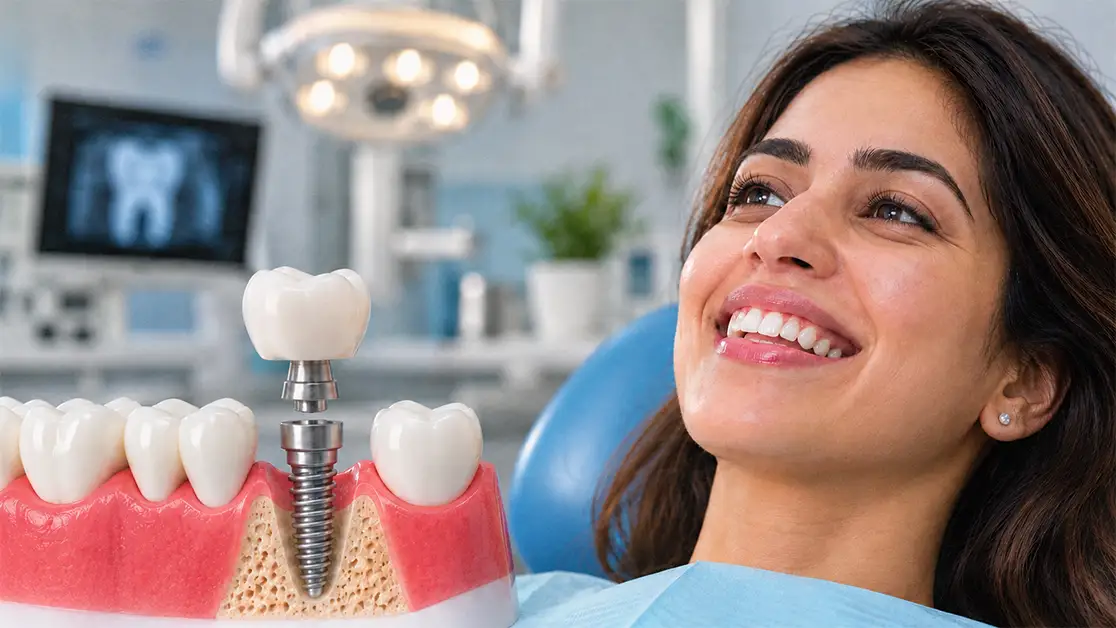
A dental implant is an artificial tooth root made of surgical-grade titanium. It is placed into the jawbone where a tooth is missing. Over the course of the next few weeks, the implant naturally fuses with the bone, creating a strong foundation for a replacement tooth.
Once the implant has healed, a custom-made crown (artificial tooth) is attached to it. The final result looks, feels, and functions very much like a natural tooth.
A complete dental implant restoration usually consists of three parts:
- Implant: The artificial root placed inside the jawbone
- Abutment: A connector that joins the implant to the replacement tooth
- Crown: The visible artificial tooth that looks and functions like a natural tooth
Why Choose a Dental Implant?
When a tooth is lost, the jawbone beneath it begins to shrink over time. Dental implants are the only tooth replacement option that helps preserve the bone while restoring the appearance and function of a natural tooth.
Dental implants are considered the gold standard for replacing missing teeth because they:
• Look and feel like natural teeth
• Allow you to eat comfortably
• Prevent neighbouring teeth from shifting
• Help preserve the jawbone
• Can last for many years with proper care
• Do not require grinding healthy adjacent teeth, unlike traditional bridges
Who Can Get Dental Implants?
examination by your dentist is necessary before planning treatment.
You may be a good candidate if you:
- Have one or more missing teeth
- Have healthy gums or are willing to treat existing gum disease
- Have enough healthy jawbone to support the implant or are suitable for bone grafting if needed
- Are in good general health and able to undergo minor oral surgery.
- Are committed to maintaining good oral hygiene and regular dental visits.
Certain conditions, such as uncontrolled diabetes, heavy smoking, or some medical conditions, may affect healing. However, these do not always rule out implant treatment. Your dentist will carefully evaluate your individual situation and recommend the most appropriate treatment plan.
A detailed examination, X-rays, and often a CBCT scan help determine whether implants are right for you.
What Is the Implant Procedure Like?
Many patients are surprised to learn how straightforward implant treatment is.
The process usually involves:
- A clinical examination, followed by digital X-rays such as an OPG and a CBCT scan
- A detailed consultation and treatment planning
- Placement of the dental implant under local anaesthesia
- A waiting period of 3 to 6 months during which the implant fuses with the bone, known as osseointegration
- Placement of the final crown
Depending on the situation, some patients may even receive a temporary tooth on the same day as the implant surgery.
Is Implant Surgery Painful?
This is one of the most common questions we hear. Fear of pain and surgery prevents most patients from considering implants as a replacement option. However, while the term surgery may sound scary, in reality the patient’s experience is no different than having any minor oral procedure carried out under local anaesthesia.
The area is numbed before the procedure, hence there is no pain felt during the implant placement. There may be mild swelling or soreness afterwards, which can be managed with prescribed medications and usually settles within 3 to 5 days.
Most patients describe the recovery as easier than they expected and often less uncomfortable than a tooth extraction.
How Do I Care for a Dental Implant?
Caring for an implant is similar to caring for your natural teeth.
Simply:
• Brush twice daily
• Floss or use interdental cleaning aids
• Visit your dentist for regular check-ups and professional cleaning
• Avoid/minimise smoking
• Have a nutritious diet
Good oral hygiene is the key to long-term implant success.
How much does a dental implant cost?
The cost of dental implants in Mumbai generally ranges from approximately ₹25,000 to ₹65,000 per tooth, depending on the type and brand of implant used. The final cost is influenced by several factors, including the implant system, the material and quality of the crown, the patient’s jawbone condition, and whether additional procedures such as bone grafting or a sinus lift are required.
Dental implants may require a greater initial financial commitment than dentures or bridges. However, their durability and benefits make them a cost-effective and healthier choice over time. With appropriate care, implants can endure for decades, prevent bone loss in the jaw, reinstate natural chewing power, and preserve the integrity of nearby healthy teeth.
Word of caution - beware of clinics promising instant and economical dental implants.
Instant tooth replacement after dental implants may sound enticing, but is not recommended in all cases. Giving a tooth on an implant before it has had time to fuse with your bone can result in implant failure.
While considering treatment cost is natural, choosing a dental implant solely based on low pricing is not recommended. Extremely low-cost alternatives often compromise on surgical-grade implant quality, thorough clinical planning, or essential post-treatment care. In the long run, this may result in unexpected complications and added health expenses. It is always wise to prioritise safety, quality materials, and your dentist’s clinical expertise above cost considerations alone.
Frequently Asked Questions
Are dental implants safe?
Yes. Dental implants have been used successfully for decades and have a very high success rate when placed by trained professionals and maintained with good oral hygiene.
Am I too old for dental implants?
Age alone is not a limitation. Many people in their 60s, 70s, and even 80s successfully receive dental implants if they are medically fit.
How long does the entire treatment take?
Most implant treatments take between 3 and 6 months. More complex cases requiring bone grafting may take longer. Certain cases permit the treatment to be completed within a month.
Can smokers get implants?
Yes, but smoking increases the risk of implant failure and slows healing. Quitting or reducing smoking significantly improves success rates.
Can diabetics get dental implants?
Yes, patients with well-controlled diabetes can undergo implant treatment.
Can I eat normally after getting an implant?
Yes. During the initial healing period of two weeks, you will need to eat soft food. Once the final crown is placed, you can usually enjoy most foods comfortably, including foods that may have been difficult to eat with missing teeth or dentures.
How long do dental implants last?
With proper care, dental implants can last for decades. In many cases, they last a lifetime. Good oral hygiene, regular dental check-ups, and avoiding smoking greatly improve their longevity.
Will my implant look and feel natural?
Absolutely. Chewing on an implant crown feels akin to chewing on natural teeth. The crown is custom-designed to accommodate the size and shape of the missing tooth. A ceramic crown can mimic natural tooth enamel and is customised to match the shade of your surrounding teeth.
Conclusion
Dental implants have transformed the way missing teeth are replaced, offering a solution that closely resembles natural teeth in both appearance and function. They can improve your ability to chew comfortably, speak clearly, smile with confidence, and help preserve the jawbone over time.
With proper care, dental implants can restore your smile, improve chewing efficiency, preserve the jawbone, and provide a solution that closely mimics the appearance and function of natural teeth.
Book Your Consultation
If you have lost a tooth or are struggling with loose dentures, dental implants may be the solution you’ve been looking for. Whether you are missing one tooth, several teeth, or need a full-mouth solution, we can help you choose the treatment that best fits your needs and budget.
Schedule a consultation at Barve Dental Clinic, Vile Parle, Mumbai, and let us help you restore your smile with comfortable, natural-looking, and long-lasting dental implants.